
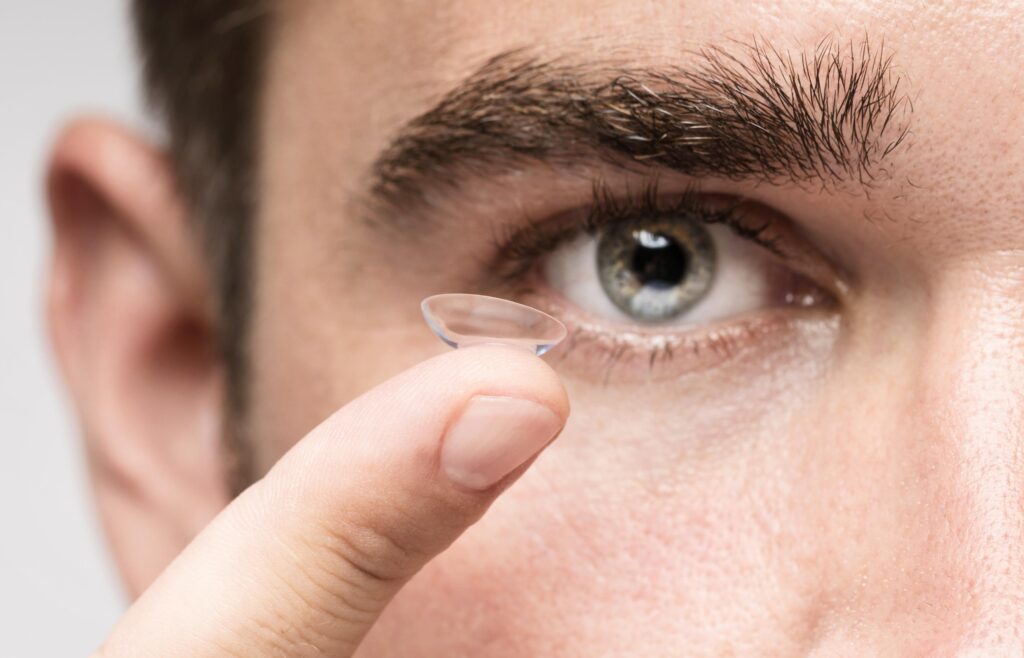
Hyperopia, or farsightedness, is among the most prevalent vision problems treated in eye clinics. Although most patients trust eyeglasses, contemporary contact lenses are a painless and very successful second option. In 2025, the technology and design of lenses have improved so much that individuals with hyperopia are able to see clearly and naturally during the day.
With an experienced eye doctor, Palo Alto patients can explore the latest options which are not only safe, but also tailored towards individual specifications.
Understanding Farsightedness
Farsightedness is due to light entering the eye and converging behind the retina rather than on it. This is due to the eyeball being shorter than usual, or the cornea being less steep than usual. Near objects are therefore blurry, although long vision is clearer.
Common signs are:
- Trouble with reading or close examination of objects
- Squinting or straining to see close objects
- Headaches for long periods after long periods of near work
- Eye strain, particularly when viewing digital screens
Hyperopia not only impacts adults, but children as well. While it is accurate to say that most babies are born farsighted, there are varying instances where most manage to grow out of it, and others would need it to be corrected. A thorough eye exam in Palo Alto guarantees proper diagnosis and the appropriate remedy.
Why Contact Lenses Are a Strong Option
Glasses are good at treating hyperopia, yet contact lenses possess a couple of benefits that appeal to most patients:
Enhanced, more natural vision: The contacts move with the eye, without the frame and distortions of glasses.
Comfort and aesthetics: Most patients prefer the cosmetic appearance of contact lenses to glasses.
Active lives: In sports, in exercise, and outdoors, contact lenses permit unfettered mobility without slipping or fogging.
There is no one size fits so here lies the importance of professional fitting at an optometry clinic in Palo Alto.
Types of Contact Lenses for Farsightedness in 2025
2025 presents patients with more options than ever. Optometry clinics take advantage of high-tech digital imaging to decode the eye with accuracy, permitting lenses that are more comfortable to wear and offer clearer vision.
1. Soft Contact Lenses
Soft contact lenses are still the most frequently prescribed. They are porous and flexible, settle quickly on the eye, and are available for daily wear, biweekly wear, or monthly wear.
Daily disposables are ideal for patients who prefer cleanliness and ease.
Reusables are economically viable for frequent wear patients if they properly clean and maintain them.
2. Toric Lenses
When astigmatism occurs with farsightedness, toric lenses allow for clear, stable vision. In 2025, they have thinner profiles, high oxygen flow through the lens, and greater rotation stability to provide precise correction.
3. Multifocal Lenses
In people over 40 years, presbyopia typically worsens farsightedness and causes trouble seeing near and far. Multifocal contact lenses contain varying areas of power so that patients can easily switch from reading, computer usage, and far vision.
4. Scleral Lenses
Scleral lenses sit on top of the sclera (the whiteness of the eye) and vault over the cornea, forming a reservoir that is loaded with tears. Scleral lenses are best for patients who have steeper prescriptions, irregular corneas, or chronic dry eye. They offer crisp, stable vision and more comfort.
5. Specialty and Custom Lenses
With today’s digital corneal mapping technology, custom contact lenses can now be made to conform to the precise measurements of an eye. Custom contact lenses are especially worthwhile for patients with uncommon shapes of the eye or who have previously failed at wearing off-the-shelf lenses.
Safety and Eye Health
Contact lenses are safe when worn as directed, but there is a possibility of infection, corneal ulcers, or chronic irritation if not worn correctly. That is why optometrists stress adherence to instructions.
Most important recommendations are:
- Handwashing prior to handling lenses
- Following the schedule of prescribed wear
- New cleaning solution every time (never overfilling old solution)
- Every 1–3 months, changing cases
- Sleeping with them only when they are expressly sanctioned by the optometrist
Timely return visits to an eye doctor in Palo Alto keep lenses fitting well and the eyes healthy.
The Importance of Regular Eye Exams
Booking an appointment for an eye exam in Palo Alto is not only imperative for the renewal of prescriptions, but also for protecting long-term vision. A thorough eye exam entails:
Refraction testing to find the degree of farsightedness
Corneal curvature tests to choose the right contact lens fit
- Tear film analysis to ensure that the eyes will feel comfortable with wearing lenses
- Eye disease screening for conditions like glaucoma, cataracts, or macular degeneration
Children and elderly people are most in need of regular eye exams, as the needs of vision change over a lifetime.
The Role of Palo Alto Optometry Practices
Palo Alto eye care offices have embraced new diagnostic tools, computerized imaging, and lens designs to offer more accurate and efficient solutions. Today, optometrists adopt a patient-centered approach, taking into account work environment, lifestyle, and history of eye health before writing prescriptions for contact lenses.
This holistic care ensures that patients not only enjoy improved vision but also long-term comfort and protection.
The Future of Contact Lenses: The future of contact lenses is already under development, with promising advancements such as:
- Smart contact lenses that can track eye and blood sugar health
- Drug-releasing lenses to treat conditions like glaucoma
- Ultra-breathable technologies for long-wear, more comfort
Although these devices are still in the early stages, patients now have access to cutting-edge options unavailable even a few years ago.
Conclusion
Farsightedness is not a hindrance anymore in 2025. Patients are now able to see sharper and more natural depending on their lifestyle with a myriad of contact lens choices.
The solution is in proper assessment and personalized attention from a skilled Palo Alto Optometry. By arranging for a full eye exam in Palo Alto, patients can learn about the best contact lens options today and anticipate even greater promise in the very near future.
Our Palo Alto optometrists, Dr. Joy Lam, is dedicated to steering every patient toward safe, effective, and comfortable vision correction.